






Email: sales3@zhefanjewelry.com
Why Is Gold Vermeil Popular in Demi-Fine Jewelry?
Gold vermeil is popular in demi-fine jewelry because it creates a defined precious-metal middle tier between ordinary gold-plated jewelry and solid gold. For brands, it can combine a sterling silver material story, accessible-premium positioning, and room to develop collections without making every design a solid-gold inventory commitment.
- TL;DR for Jewelry Brands
- Why Gold Vermeil Matters to Demi-Fine Brands
- What Is Demi-Fine Jewelry?
- What Qualifies as Gold Vermeil?
- Why Has Gold Vermeil Become Popular with Demi-Fine Jewelry Brands?
- It Fills the Gap Between Fashion and Fine Jewelry
- It Supports a More Credible Material Story
- It Gives Brands More Design and Collection Flexibility
- It Supports Customer Entry and Brand Upgrading
- It Allows Brands to Test New Designs with Lower Solid-Gold Exposure
- What Are the Commercial and Technical Limits of Gold Vermeil?
- Gold Vermeil Is Still a Plated Product
- Different Product Categories Experience Different Wear
- Plating Cannot Correct Poor Surface Preparation
- What Should B2B Buyers Specify Before Ordering Gold Vermeil Jewelry?
- How Zhefan Jewelry Turns Gold Vermeil Specifications into Repeatable Production
- Project-Specific Development and Sample Confirmation
- How Zhefan Controls Surface Quality Before Gold Vermeil Plating
- Project Lead Time and Bulk Production Support
- Why Gold Vermeil Is More Than a Passing Trend
- Discuss Your Gold Vermeil Jewelry Project
- References
- FAQ
TL;DR for Jewelry Brands
- Gold vermeil occupies a clear position between ordinary gold-plated jewelry and solid-gold fine jewelry.
- It supports material transparency, accessible-premium positioning, collection development, and brand-level product architecture.
- Its performance depends on silver purity, gold karat, plating thickness, surface preparation, approved samples, and quality inspection.
Why Gold Vermeil Matters to Demi-Fine Brands
Gold vermeil matters because it gives a demi-fine collection a material and price position that is more specific than "gold tone," while requiring less gold exposure than an equivalent solid-gold range. Grand View Research estimates the global demi-fine jewelry market at approximately USD 2.8 billion in 2025 and projects it to grow from USD 3.1 billion in 2026 to USD 6.4 billion by 2033, representing an estimated CAGR of 11.1%. That forecast is directional market evidence rather than a guarantee of demand, but it illustrates the commercial relevance of the category.
A 2025 Financial Times report described increasingly informed customers as placing greater value on design integrity, storytelling, and distinctive aesthetics alongside carat weight. Liberty jewelry buying manager Ruby Beales was among the industry figures interviewed for the report. For B2B buyers, the implication is clear: a gold vermeil program needs both an intelligible material specification and a design reason for existing. Gold vermeil is popular because it provides a precious-metal middle tier, not because it is simply a cheaper version of solid gold.
What Is Demi-Fine Jewelry?
Demi-fine jewelry is a market-positioning category between fashion jewelry and fine jewelry; it is not a universal legal material classification. Collections may use sterling silver, gold vermeil, lower-karat solid gold, and selected gemstones, depending on the product and target market. A demi-fine jewelry manufacturer, therefore, needs to translate brand positioning into a documented material structure rather than treat the label itself as a product specification.
In a 2018 Forbes interview, Monica Vinader, co-founder and CEO of Monica Vinader, described "a gap in the market between fine and fashion jewelry." That interview supports the category's identified market gap; it should not be read as evidence of current market growth. Gold vermeil is one material closely aligned with that middle position, but it is not the only possible material choice.
|
Category |
Typical material structure |
Commercial position |
Main B2B concern |
|
Fashion jewelry |
Base metal with project-specific plating |
Entry level |
Price, speed, and trend execution |
|
Demi-fine jewelry |
Sterling silver, gold vermeil, or selected lower-karat gold |
Accessible premium |
Material clarity and repeatable quality |
|
Fine jewelry |
Solid gold, platinum, and precious gemstones |
High-value luxury |
Metal value, craftsmanship, and long-term value |
Demi-fine is a commercial bridge category; the correct material choice depends on the brand's price point, product type, and customer promise
What Qualifies as Gold Vermeil?
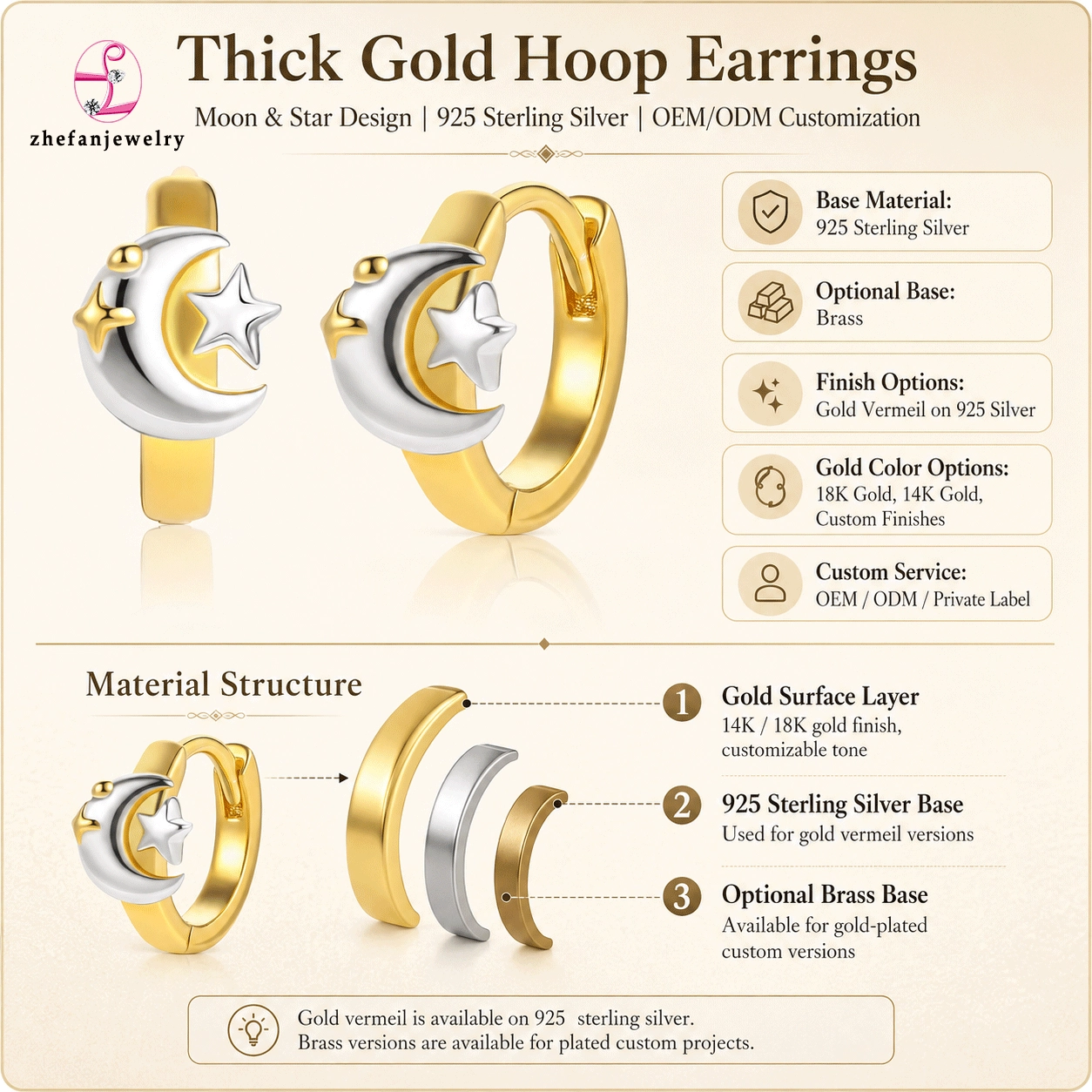
In the United States, "vermeil" has a defined marketing meaning under the FTC Jewelry Guides. A product described as vermeil should have a sterling silver base, gold or a gold alloy of at least 10K on all significant surfaces, and a minimum thickness throughout equivalent to 2.5 microns of fine gold. Where a base-metal layer such as nickel sits between the silver and gold, the presence of that base metal must be disclosed. U.S. terminology should not be treated as a universal global definition; target-market rules and disclosures still need to be confirmed. FTC Jewelry Guides, 16 CFR §23.4
This is why 925 sterling silver gold vermeil jewelry cannot be defined by appearance alone. The base, karat, gold thickness, coverage, and any underlayer need to be written into the approved specification. For U.S.-positioned projects, The B2B Guide to 2.5 Micron Gold Vermeil Jewelry Standards explains how the 2.5 micron gold vermeil threshold should be used as a terminology and sourcing control point—not as a universal performance guarantee.
|
Material |
Base material |
Gold structure |
Typical position |
|
Gold-plated jewelry |
Often brass or alloy |
Project-specific electroplated gold layer |
Fashion jewelry |
|
Gold vermeil |
Sterling silver |
Defined gold layer; U.S. guidance sets a 2.5 μm threshold |
Demi-fine jewelry |
|
Gold-filled |
Usually a base-metal core |
Mechanically bonded gold alloy layer |
Bridge category |
|
Solid gold |
Gold alloy throughout |
No plated surface |
Fine jewelry |
For a deeper comparison of base metals, plating structures, product positioning, and sourcing requirements, see Gold Vermeil vs. Gold Plating: Which Fits Your Jewelry Brand?. A vermeil label does not prove polishing quality, plating consistency, or bulk-production control.
Why Has Gold Vermeil Become Popular with Demi-Fine Jewelry Brands?
It Fills the Gap Between Fashion and Fine Jewelry
Gold vermeil can give brands a clearer middle tier between conventional plated jewelry and solid gold. The sterling silver base and defined gold layer support a more specific material story than a generic plated finish, while the product remains distinct from an all-gold item. Monica Vinader's Forbes interview is a useful illustration of the gap this tier addresses, rather than proof that all brands use the same three-level assortment.
For buyers developing a gold vermeil jewelry wholesale range, that middle tier can help separate entry, core, and premium products by material and price. The architecture still needs to be tested against target retail price, weight, stone cost, and reorder potential.
It Supports a More Credible Material Story
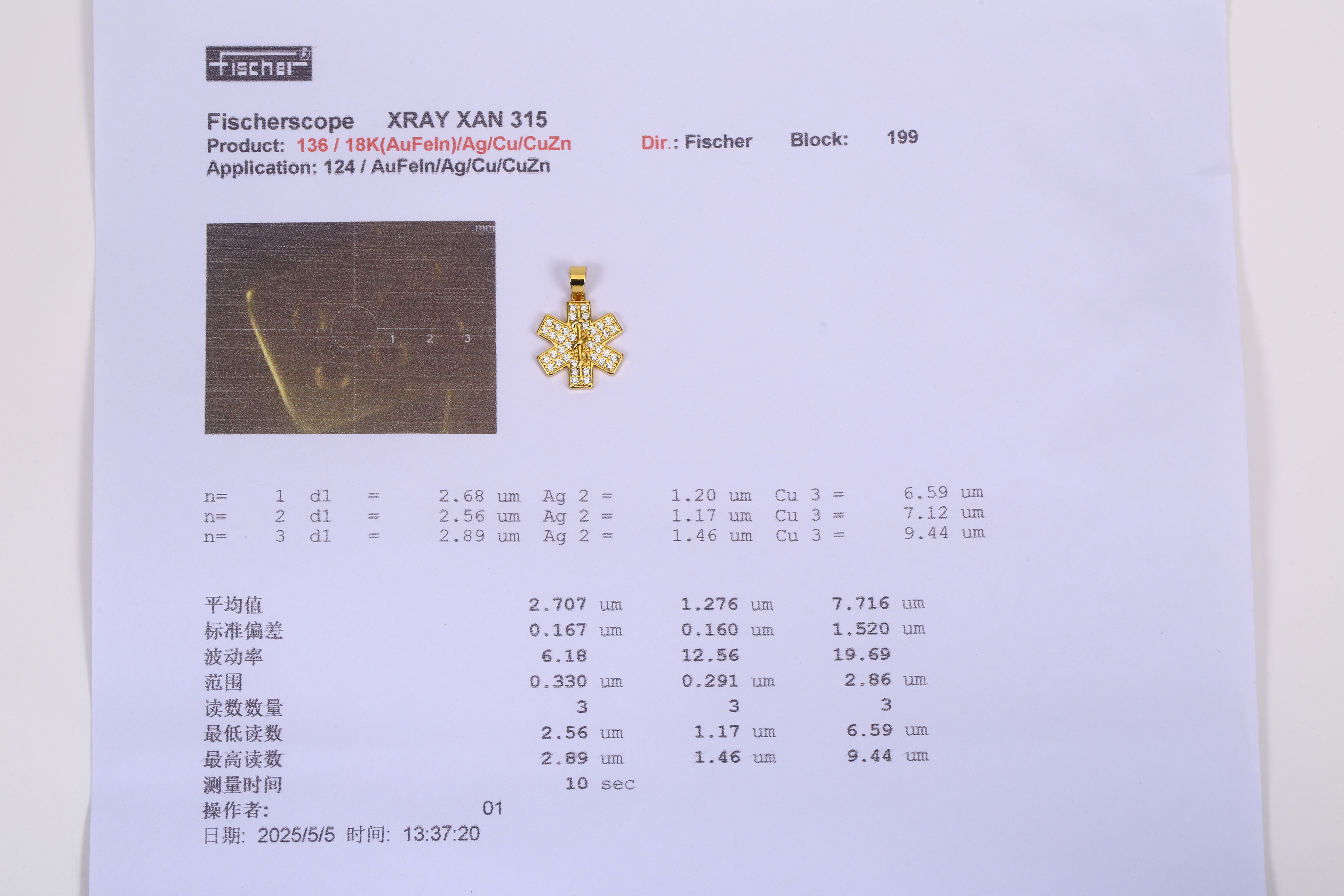
Gold vermeil supports transparent communication when the brand can identify its silver base, gold karat, thickness, finish, and care boundary. The same Financial Times report linked buyer interest to design integrity, storytelling, and a clearer understanding of material differences. The sourcing implication is to make the material explanation precise instead of relying on a luxury-sounding finish name.
Credible Material Story
Gold Vermeil Earrings Wholesale
A credible vermeil story is a documented material claim, not a decorative product description
It Gives Brands More Design and Collection Flexibility
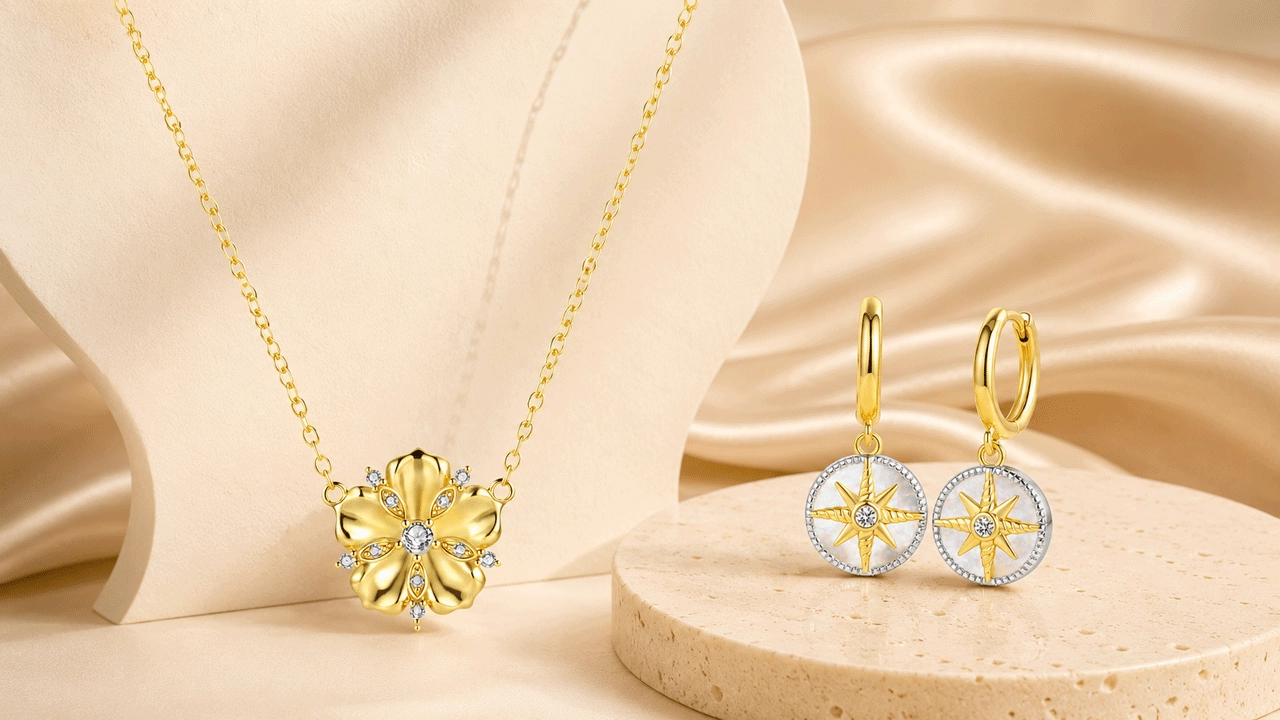
Gold vermeil can let a brand develop different silhouettes, stones, and color directions without requiring each concept to enter solid-gold production. The Financial Times report also discussed how Missoma founder Marisa Hordern responded to higher gold costs through material and design adjustments while protecting the brand's visual identity. This is an industry perspective, not evidence that every design becomes commercially viable.
For sourcing, the choice between 14K gold vermeil jewelry and 18K gold vermeil jewelry should be made through color direction, specification, and target positioning. See 14K vs. 18K Gold Vermeil: Choosing the Right Plating Tier. CAD and approved samples should confirm proportion, stone setting, finish, and logo placement before the collection is expanded.
It Supports Customer Entry and Brand Upgrading
Some established demi-fine brands have used lower-priced silver or vermeil products as an entry point and later introduced fine jewelry. In a 2021 Vogue Business report, Maria Black said that customers who began with lower-priced silver were moving toward fine jewelry; the article also described Missoma's gold-vermeil core and its extension into fine jewelry. These are representative brand cases, not a universal customer path.
A private label gold vermeil jewelry program can use that logic to create a coherent first purchase and future upgrade path, provided the brand's product quality, pricing, and customer communication support it.
It Allows Brands to Test New Designs with Lower Solid-Gold Exposure
Gold vermeil can reduce initial precious-metal commitment when a brand is testing a new silhouette, stone combination, or seasonal concept. JCK noted in 2026 that vermeil lets retailers test trend-led designs without the same solid-gold inventory exposure; successful designs may later be offered at a higher solid-gold tier. It does not remove all inventory risk or guarantee that a design will convert.
For projects handled by a custom gold vermeil jewelry factory, the sample and defined first production quantity should serve as decision points—not as assumptions that a plated version automatically validates a solid-gold launch.
What Are the Commercial and Technical Limits of Gold Vermeil?
Gold Vermeil Is Still a Plated Product
Gold vermeil offers a gold appearance and a lower initial precious-metal commitment than solid gold, but it does not offer the permanence of solid gold. JCK makes the same boundary explicit: vermeil is a category in its own right, not a substitute for solid gold. Wear can vary with friction, sweat, cosmetics, cleaning, storage, and frequency of use.
Different Product Categories Experience Different Wear
Different structures experience different friction. Rings and bracelets often receive more surface contact than earrings or pendants; chains also have moving contact points. Products with the same nominal plating thickness may therefore perform differently when their structures and wear conditions differ. Buyers should set category-specific specifications and customer-care expectations rather than apply one durability claim across the entire collection.
Plating Cannot Correct Poor Surface Preparation
Plating is a finish, not a repair method. Pinholes, pitting, black spots, rough edges, marks, and weak detail preparation need to be addressed before plating because the gold layer cannot reliably correct the underlying surface. This production principle is reflected in Zhefan Jewelry's Proprietary 6-Polishing & 6-Inspection Process.
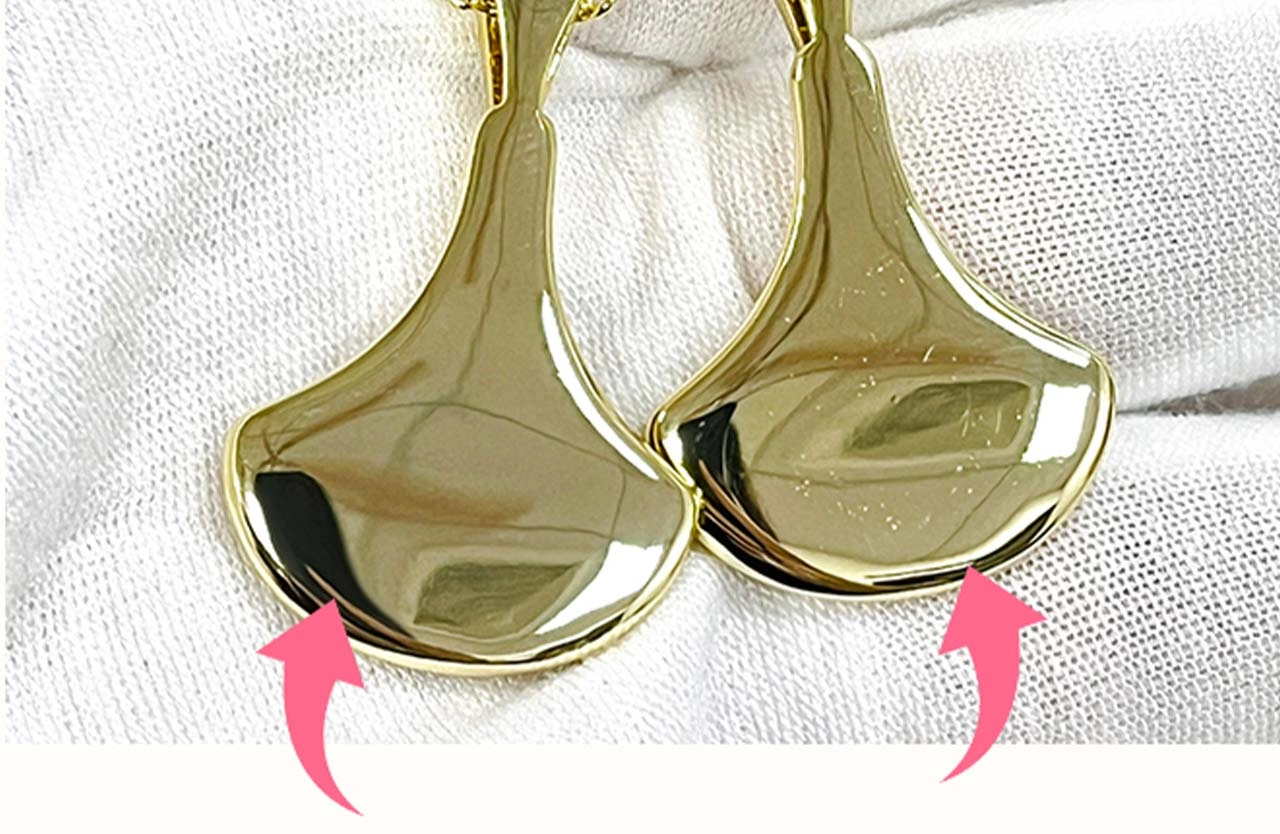
Thick Gold Earrings: Before vs. After Inspection
Visible defects are corrected before final quality approval.
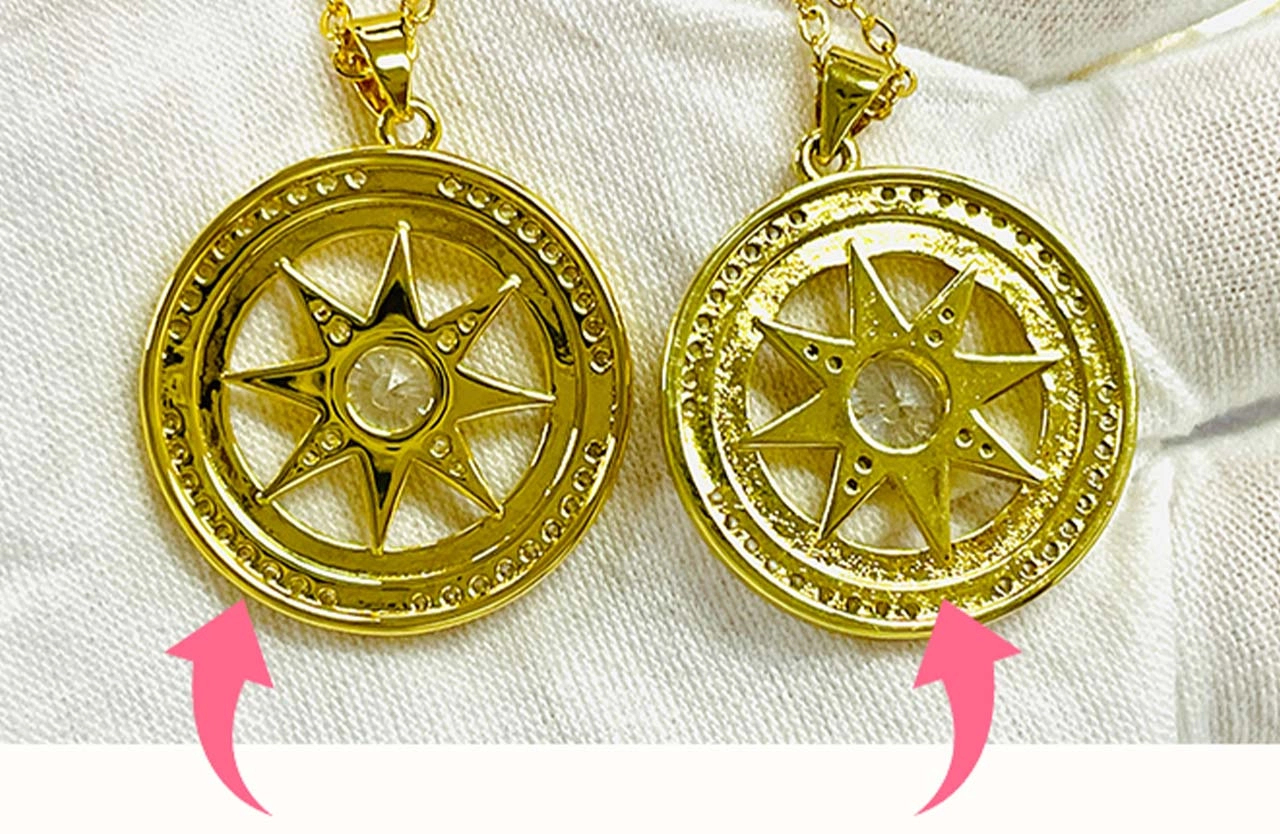
Thick Gold Vermeil Pendant: Before vs. After Inspection
Surface flaws are refined before the pendant passes inspection.
What Should B2B Buyers Specify Before Ordering Gold Vermeil Jewelry?
Before ordering, buyers should turn "gold vermeil" into an agreed production reference. This is the point at which a gold vermeil jewelry manufacturer should be able to answer specific process and document questions rather than make general quality claims.
|
Specification |
What to confirm |
Why it matters |
|
Base material |
925 sterling silver and written fineness |
Defines material identity |
|
Gold layer |
Karat, micron thickness, and significant-surface coverage |
Supports terminology and quotation |
|
Underlayer |
Material, need, and required disclosure |
Affects labeling and skin-contact communication |
|
Finish and category |
Polished/matte/brushed: ring, chain, earring, etc. |
Influences process and wear exposure |
|
Stone setting |
Stone type, setting sequence, and security check |
Controls detailed finishing and acceptance |
|
Approved sample |
Gold color, finish, dimensions, structure, and logo |
Becomes the bulk reference |
|
Inspection and market |
Acceptance checks, testing scope, target market |
Clarifies documentation and responsibility |
A vague request—"We need premium gold vermeil jewelry"—leaves critical decisions open. Likewise, a phrase such as "thick gold vermeil jewelry" should never replace a numeric micron specification. A production-ready request identifies the 925 silver base, gold karat and micron requirement, finish, plating coverage, stone-setting method, target market, approved color, logo location, packaging, and final inspection criteria.
Buyers evaluating a gold vermeil jewelry supplier should also ask how thickness is confirmed, how sample-to-bulk color is controlled, which surfaces are included, and how nonconforming pieces are handled. For an OEM launch, How to Launch a Private Label Gold Vermeil Line with an OEM Factory provides the complementary development checklist.
How Zhefan Jewelry Turns Gold Vermeil Specifications into Repeatable Production
Once a brand has defined the silver base, gold karat, plating thickness, finish, and target market, the next challenge is converting those requirements into an approved sample and a repeatable bulk-production reference. Zhefan's role as a custom jewelry manufacturer is to connect that written specification to development, finishing, inspection, and lead-time planning.
Project-Specific Development and Sample Confirmation
Zhefan confirms CAD details, including shape, proportion, dimensions, structure, and logo placement, before sampling. The sample then confirms gold color, finish, and stone-setting results. The approved sample and written specification become the reference for bulk production; decisions are made according to structure, weight, plating, target market, and order quantity. For brands developing custom sterling silver jewelry, working with a silver jewelry manufacturer that connects CAD approval, sample confirmation, plating requirements, and bulk specifications is essential. This is the practical control required for OEM gold vermeil jewelry development, rather than a generic promise of quality.
How Zhefan Controls Surface Quality Before Gold Vermeil Plating
Zhefan Jewelry's proprietary 6-polishing & 6-inspection process addresses the production risk that plating cannot repair surface defects. For gold vermeil, the relevant stages include machine grinding and polishing, initial linen-wheel hand polishing, secondary linen-wheel polishing to identify pinholes, black spots, and pitting, detail polishing after stone setting, final linen-wheel polishing before plating, and final inspection after plating.
Prongs, edges, and detailed areas receive another review after setting. The final inspection checks color, scratches, missing stones, and overall appearance. The process supports consistency, but it does not guarantee zero defects.
Zhefan Jewelry's Proprietary 6-Polishing & 6-Inspection Process
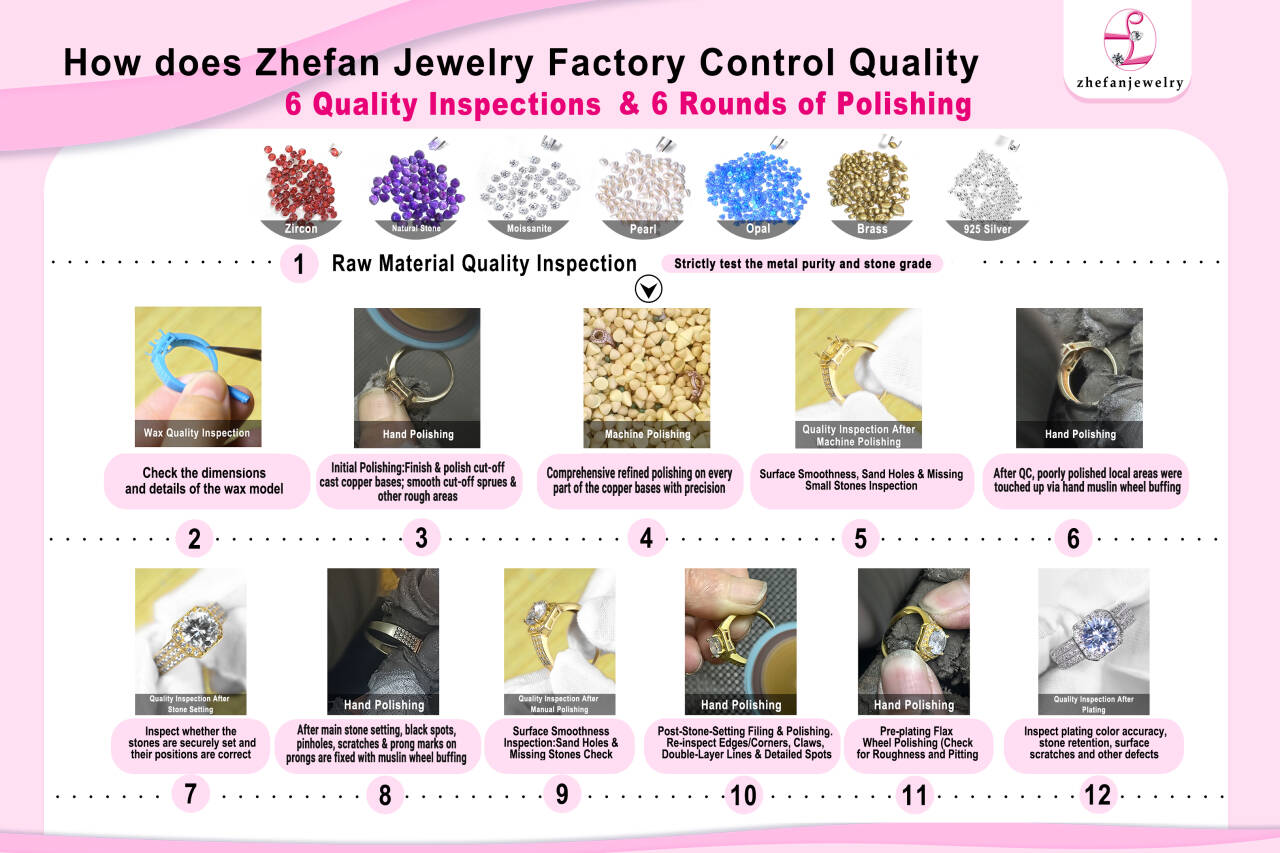
6-Polishing & 6-Inspection
Zhefan Jewelry’s proprietary 6-polishing & 6-inspection process helps control a key risk in 925 sterling silver gold vermeil jewelry: plating can enhance a surface, but it cannot repair pinholes, pitting, black spots, or poor polishing underneath. For 2.5 Micron Gold Vermeil projects, the process includes machine polishing, repeated linen-wheel hand polishing, detail polishing after stone setting, and a final polish before plating. Prongs, edges, and stone-set details are reviewed again before final inspection for color, scratches, missing stones, and overall appearance. This supports more consistent bulk production for a gold vermeil jewelry manufacturer, although no process can guarantee zero defects.
Project Lead Time and Bulk Production Support
Sample development is typically 7-10 days, and bulk production is typically 2-4 weeks; international shipping is confirmed separately. Actual timing depends on design complexity, quantity, stone setting, plating, packaging, testing, and revision rounds. These are planning ranges, not fixed guarantees. For ongoing wholesale jewelry development, confirming the specification and sample promptly is part of maintaining a repeatable production schedule.
Why Gold Vermeil Is More Than a Passing Trend
Gold vermeil remains relevant to demi-fine jewelry because it can connect a sterling silver base, a defined gold finish, and an accessible-premium position. It can help brands develop product tiers, test concepts with lower solid-gold inventory exposure, and communicate a more specific material story than ordinary gold-plated jewelry. Its commercial value, however, depends on controlled specifications and realistic product expectations.
For a balanced durability discussion before launch, see Does Gold Vermeil Tarnish or Fade?. For the underlying finishing controls, see Zhefan Jewelry's Proprietary 6-Polishing & 6-Inspection Process.
Discuss Your Gold Vermeil Jewelry ProjectShare the product design, target gold color, product category, expected quantity, target market, plating requirement, stone specification, and packaging requirement. Zhefan can then review the development route, sample requirements, production specifications, and project-based quotation. REQUEST A PROJECT-BASED QUOTE |
References
1. Grand View Research. "Demi-Fine Jewelry Market Size & Share Report, 2026-2033. "Accessed July 29, 2026. Link. Used for market size and forecast context.
2. Soltani, Sonia Esther. Financial Times. "Semi-fine jewelry offers a silver lining to gold surge." November 14, 2025. Link. Used for buyer, material, and design context.
3. McCoole, Veena. Forbes. "Inside Monica Vinader's 10-Year Plan to Grow a $65 Million Global Jewelry Brand." July 24, 2018. Link. Used for the stated fashion-to-fine market gap.
4. Maguire, Lucy. Vogue Business. "The demi-fine jewelry boom: Is luxury next?" January 20, 2021. Link. Used as representative brand cases for customer entry and upgrading.
5. Siminitz, Brittany. JCK. "The Vermeil Jewels Poised to Be Summer's Best Sellers." April 8, 2026. Link. Used for design-testing exposure and the durability boundary against solid gold.
6. Federal Trade Commission. 16 CFR §23.4—Misuse of the word "vermeil." "Current eCFR link. Used for the U.S. vermeil definition and base-metal disclosure consideration.
7. Zhefan Jewelry. "Zhefan Jewelry's Proprietary 6-Polishing & 6-Inspection Process. "First-party production documentation, 2026. Link. Used for surface preparation, inspection, sample-control, and planning-range statements.
FAQ
What evidence should a supplier provide to verify that a product qualifies as gold vermeil rather than standard gold-plated jewelry?
A 925 Sterling Silver Gold Vermeil Jewelry claim should be supported by more than a product name, image, or 925 mark. Buyers should request a written material specification covering the sterling-silver base, gold karat, minimum plating thickness, significant-surface coverage, and any intermediate layers. For U.S.-oriented projects, the specification should state whether the product is designed to meet the relevant 2.5 Micron Gold Vermeil threshold. Supporting evidence may include a component BOM, material or assay record, plating-thickness result, and the approved production sample. A qualified gold vermeil jewelry manufacturer should connect each document to the named SKU and component. These records verify only the identified sample, configuration, and batch; they do not automatically cover future variants or repeat orders.
How should buyers verify the sterling silver base across the jewelry body, chain, clasp, earring posts, solder, and other relevant components?
Buyers should verify sterling silver by component rather than assuming that a 925 result for the main body applies to the entire item. For 925 Sterling Silver Gold Vermeil Jewelry, request a BOM that identifies the body, chain, clasp, jump rings, posts, solder, decorative findings, and any outsourced parts. The supplier should clarify which parts share the same silver construction and which require separate confirmation because they use a different process or sub-supplier. A gold vermeil jewelry supplier should also record these details in the approved sample and bulk specification. If a chain, clasp, solder, or findings supplier changes, the existing evidence should be reviewed before reuse. The key control is traceability between the finished SKU, its components, and the written material declaration.
How should buyers specify and verify 2.5-micron gold thickness across multiple measurement points on a gold vermeil product?
A 2.5 Micron Gold Vermeil requirement should be written as a measurable acceptance standard, not as a general request for “thick plating.” Buyers should define the target market, measurement method, number of points, minimum acceptable value, average value if used, and the exact areas to be checked, such as visible surfaces, edges, recessed areas, chain sections, and clasps. A claim of thick gold vermeil jewelry is not meaningful unless those details are documented. A gold vermeil jewelry factory should identify the tested sample and explain whether the result applies to the body only or to other significant components. Sample results are useful for approval, but they should not be treated as automatic proof for every bulk lot; batch-level controls or agreed inspection records are still needed.
How should jewelry buyers evaluate 14K versus 18K gold vermeil for a wholesale or private-label collection?
Neither 14K gold vermeil jewelry nor 18K gold vermeil jewelry is universally better. The choice should reflect the desired gold tone, existing collection palette, target customer, retail positioning, and regional preferences. In general, 14K tones may appear softer or lighter, while 18K tones may appear richer and warmer, but the final result also depends on the plating solution, surface finish, and approved sample. For Private Label Gold Vermeil Jewelry, buyers should approve a physical color master rather than relying only on wording such as “18K gold color.” For a gold vermeil jewelry wholesale collection, maintaining one approved color reference across related SKUs can reduce visible variation. Reorder consistency should be judged against retained samples and documented specifications, not product photos alone.
What should buyers confirm about plating underlayers and the scope of nickel-free claims in gold vermeil jewelry?
Buyers should confirm the complete plating stack, not only the outer gold layer. For 925 sterling silver gold vermeil jewelry, the written specification should identify the silver base, any intermediate layer, the gold layer, and any protective topcoat. Intermediate layers may be used for adhesion, diffusion control, color management, or surface leveling, but their presence and purpose should be disclosed where relevant to the target-market claim. In an OEM gold vermeil jewelry project, a “nickel-free” statement should also specify whether it covers the full product, the plating stack, only skin-contact components, or the tested sample. A gold vermeil jewelry manufacturer should ensure that the evidence corresponds to the current SKU, component set, finish, and production version. Broad claims should not extend beyond the stated testing scope.
What controls should a supplier use to maintain gold color and plating-thickness consistency across bulk and repeat orders?
Bulk consistency depends on controlled references and change management, not on a single attractive sample. For gold vermeil jewelry wholesale projects, buyers should approve a physical sample, gold-color master, written plating specification, surface-finish reference, and clear component BOM before bulk production. The supplier should retain relevant batch records, including the approved gold tone, thickness results where required, production date, inspection outcome, and any material or process changes. In OEM gold vermeil jewelry development, repeat orders should be compared with retained samples rather than only digital images. At Zhefan, Zhefan Jewelry’s Proprietary 6-Polishing & 6-Inspection Process provides pre-plating surface reviews and final inspection after plating for color, scratches, stone loss, and overall appearance. It supports consistency, but it does not eliminate the need for agreed tolerances and batch verification.
Can one material or compliance report cover multiple gold vermeil SKUs, colors, components, and repeat orders?
Usually, no. A report only supports the sample, components, materials, color, method, and conditions specifically identified in that document. For private label gold vermeil jewelry or gold vermeil jewelry wholesale programs with multiple SKUs, buyers should check whether the tested item has the same silver base, findings, underlayer, gold color, plating process, and component supply chain as the product being sold. A new clasp, chain, post, solder, color, or plating configuration can change the scope of the original evidence. A gold vermeil jewelry supplier should maintain a report-to-SKU matrix so buyers can see which documents support each product and which items need separate review. Where construction is materially different, a new approval or test may be appropriate.
What should buyers reapprove or retest when changing a gold vermeil jewelry supplier or adding a second source?
Changing suppliers or adding a second source should be treated as an equivalence-approval project, not as a simple repeat order. A demi-fine jewelry manufacturer may work from the same CAD files, but differences in silver sourcing, component BOMs, solder, polishing, stone setting, plating stack, color control, and inspection methods can affect the finished result. When transferring to a custom gold vermeil jewelry factory, buyers should reapprove material declarations, component lists, gold karat and thickness requirements, color sample, surface finish, logo or marking, stone security, packaging, and applicable test evidence. For OEM gold vermeil jewelry, a pilot batch should be compared with the retained approved sample before normal production begins. Both suppliers should work to the same written specification while keeping separate batch and change records.
Recommended for you

What Is Gold Vermeil Jewelry? A Complete Guide for Brands and Retailers

Thick Gold Plated Jewelry Manufacturer for 925 Silver & Brass Jewelry

How to Choose a Gold Vermeil Jewelry Manufacturer

Gold Vermeil vs. Gold-Plated Jewelry: Which Fits Your Luxury Jewelry Brand?

Can Silver or Brass Be PVD Coated? A Professional Guide for Jewelry Brands
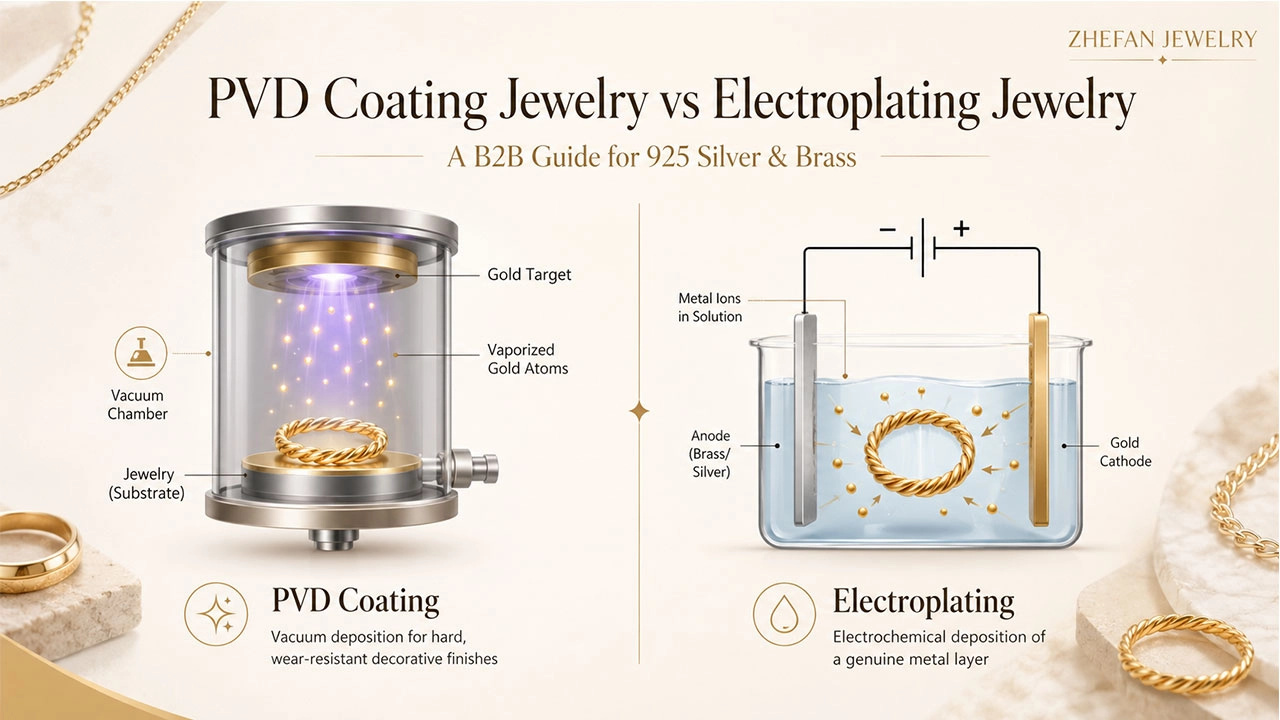
PVD Coating vs Electroplating for Jewelry: A B2B Buying Guide for 925 Silver and Brass
Product Categories
Discuss Your Ideas with a Professional Custom Jewelry Manufacturer
We provide personalized jewelry customization services for clients worldwide.
Rest assured that your privacy is important to us, and all information provided will be handled with the utmost confidentiality.
By clicking 'Send Inquiry Now' I agree to ZHEFAN JEWELRY processing my personal data.
To see how to withdraw your consent, how to control your personal data and how we process it, please see our Privacy Policy and Terms of use.
From design to production, ZHEFAN JEWELRY offers a one-stop solution to help you enhance your brand value and market competitiveness.
Get A Quote
Contact
Tel: (+86) 188 1927 7817
© 2026 Zhefan Jewelry. All Rights Reserved.
Facebook
Instagram
YouTube
Whatsapp: +8618819277817